DDoS HTTP Flood Protection
Distributed Denial of Service (DDoS) attacks seek to overwhelm your application with illegitimate requests. Network-protocol-based DDoS attempts like UDP floods, ICMP floods, and other attacks are automatically blocked.
Available on the Advanced, Professional, Network, and Enterprise plans.
Application-level DDoS attempts (where massive numbers of HTTP GET/POST requests are issued in rapid succession) are more difficult to block, because outwardly they look very much like legitimate traffic.
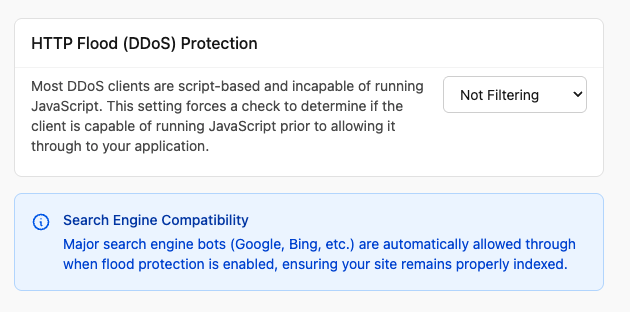
If you're currently under DDoS attack or suspect that you will be, set the HTTP Flood (DDoS) Protection setting on the Traffic Rules > Flood Protection page of your Expedited WAF dashboard to Filtering. This forces each client making requests to be able to execute javascript.
This requirement eliminates most DDOS HTTP Floods, which are conducted with low-resource, script-based tools that can't run javascript.
The same check also stops legitimate clients that can't run javascript, such as mobile apps calling an API, webhooks, and uptime monitors. Allowed paths don't exempt requests from it. To let one of these clients through while Filtering is on, add its IP address under IP Rules > Allow IPs, or point a separate hostname for it straight at your Heroku app and protect that hostname in your app.